

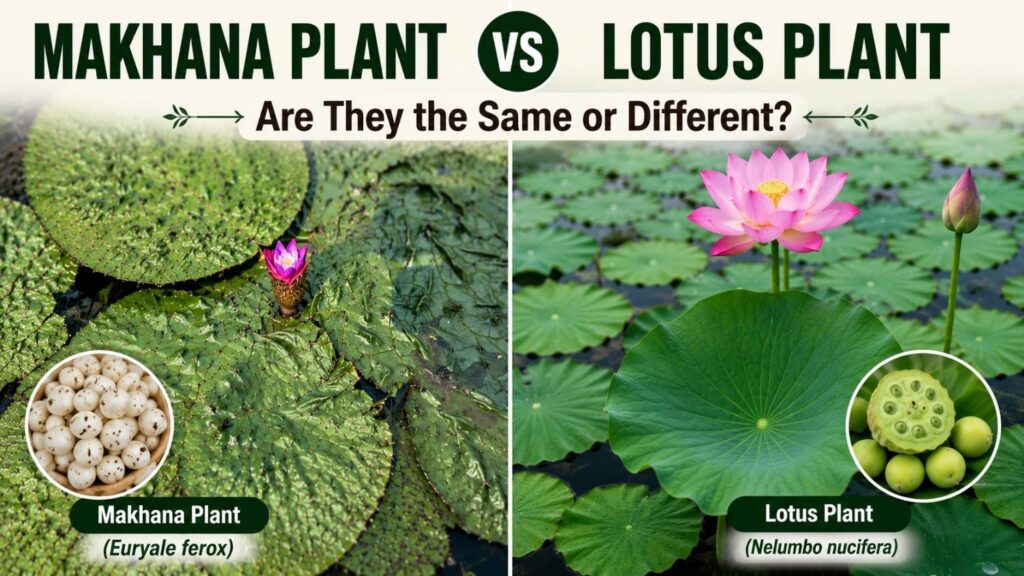
In general, people consider the makhana plant and the lotus plant to be the same. This is a common confusion as both these plants grow in water and has large, rounded leaves, but the actual fact is that these two are completely different plants.
Euryale ferox is the scientific name of the makhana plant, and Nelumbo nucifera is the name for the lotus plant. Makhana is commonly called with the names fox nut, gorgon nut, or prickly water. On the other hand, the common name for the lotus plant is sacred lotus, Indian lotus, or kamal.
Both these plants grow in wetlands or ponds. They may appear the same, but there is a vast difference in their leaves, flowers, seeds, and even in growth patterns. In this content, we will find out the differences between the makhana plant vs. lotus plant.
Are Makhana Plant and Lotus Plant the Same?
To be very precise, the makhana plant and lotus plant are not the same.
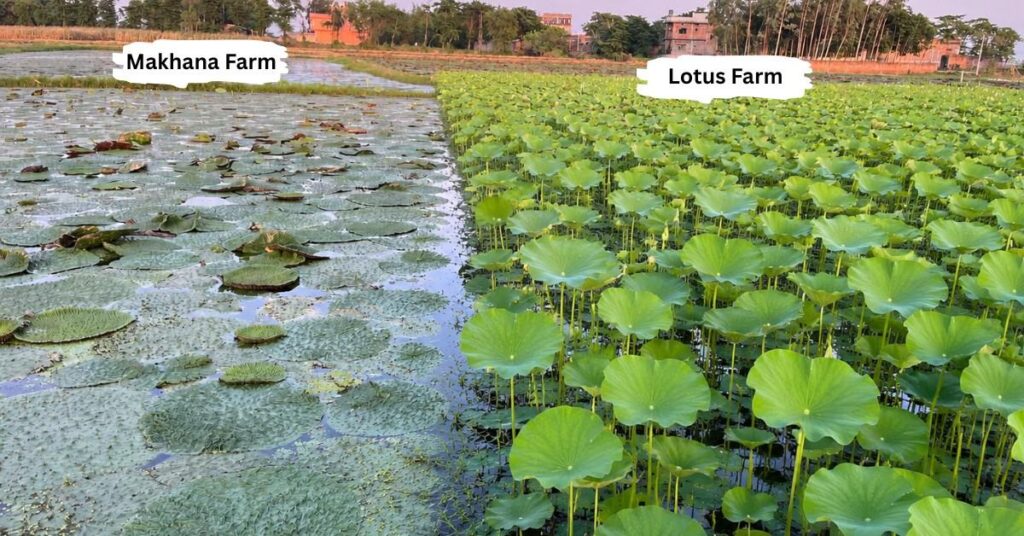
Makhana is harvested from the seeds of the Euryale ferox plant, and the lotus seeds come from the Nelumbo nucifera plant. The leaves of these two plants are the major difference point. Makhana leaves are thorny and stay close to the water surface, while lotus leaves are smooth and stand high above the water.
What is the Makhana Plant?
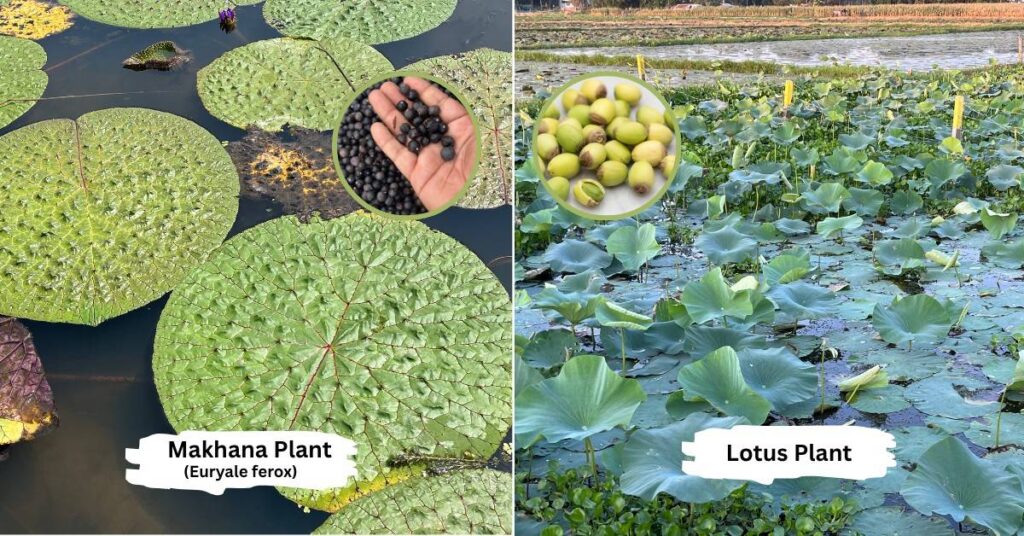
Makhana is a water plant that grows in ponds, stagnant water bodies, or wetlands. This plant is grown for the seeds, which are collected, dried, roasted, and popped before consumption. The end product is the white and crunchy makhana that we get from the market.
There are various local names for the makhana:
- Fox nut
- Phool makhana
- Gorgon nut
- Prickly water lily
It is very popular as a healthy snack and is mixed in dishes like kheer, sweets, namkeen, and other healthy dishes. Water-rich places in India like Bihar and Odisha, grow lots of makhana.
How Does the Makhana Plant Look?
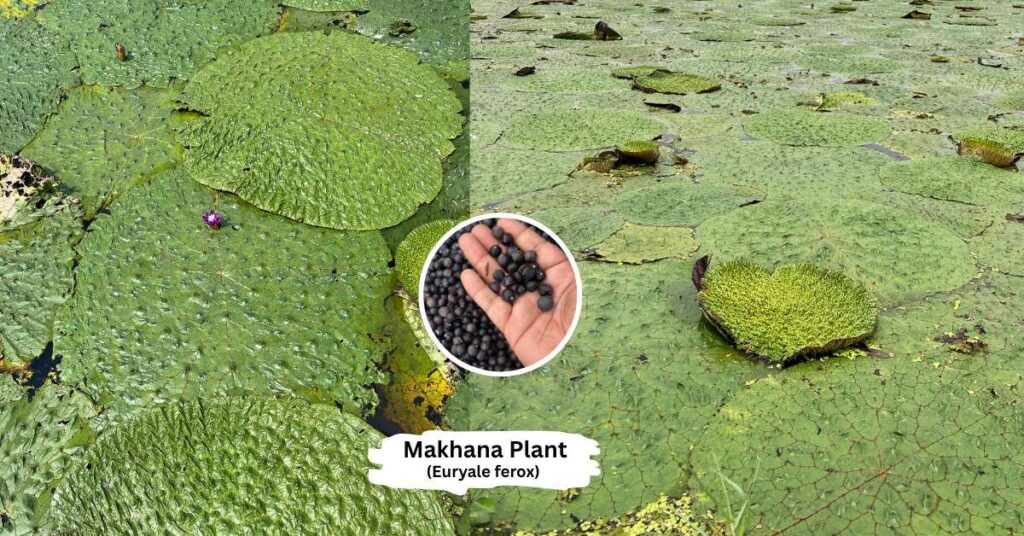
The makhana plant has large, rounded leaves which are spread on the surface of water. They are thorny and look very similar to lotus leaves when seen from a distance. There are tiny thorns on the leaf surface, stems, and also on the lower side of the leaves. This is basically due to the presence of these leaves, for which this plant is also known as prickly water lily.
The leaf position is also important, as unlike lotus leaves, the makhana leaves stay just above the water surface. They don’t stand high above the water surface.
What is A Lotus Plant?
Lotus is also a water plant that grows in stagnant water, ponds, or wetlands. The popular common names of lotus are:
- Lotus
- Sacred lotus
- Indian lotus
- Kamal
The lotus flower is popular due to its beauty, which comes in various colours. The leaves and flowers rise high above the water surface. The flower has great religious importance in India as well as other Asian countries. The seeds and stem of the lotus plant are also edible.
How Does the Lotus Plant Look?
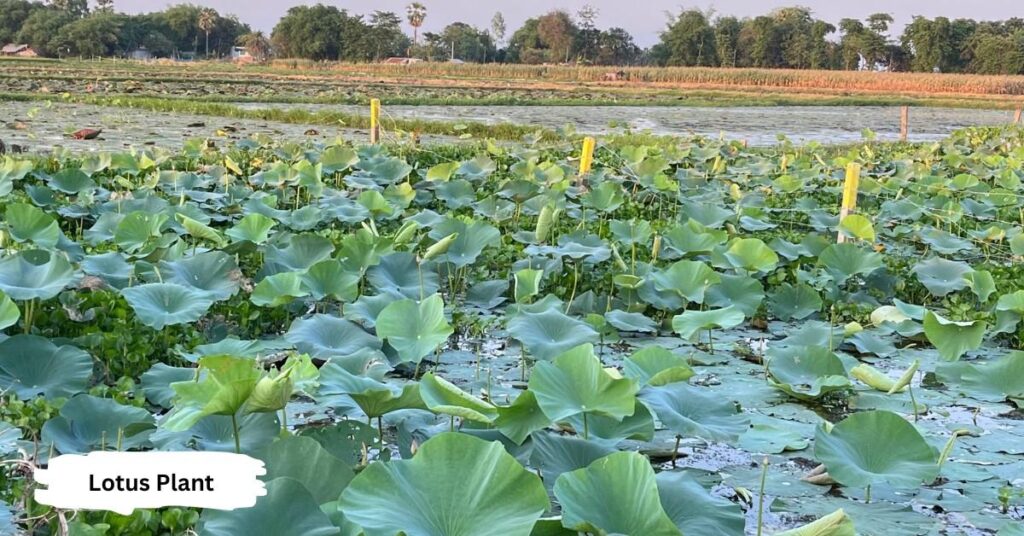
As mentioned earlier, the lotus leaves are round, and they are smooth. The height of the leaves is also notable as they generally stand high above the water surface. The flower too stands high above the water surface.
Makhana Plant Vs. Lotus Plant: Main Differences
| Feature | Makhana Plant | Lotus Plant |
| Scientific name | Euryale ferox | Nelumbo nucifera |
| Common names | Makhana, fox nut, gorgon nut, prickly water lily | Lotus, sacred lotus, Indian lotus, kamal |
| Leaf texture | Thorny or spiky | Smooth |
| Leaf position | Just above or close to the water surface | Slightly above the water surface |
| Flower appearance | Less showy than lotus | Large, beautiful, and clearly visible |
| Main edible part | Seeds processed into makhana | Seeds, roots, petals, and other parts |
| Common confusion | Often mistaken for lotus seed plant | Often believed to produce makhana |
This table clearly shows that makhana and lotus are different plants. They may look similar from far away, but their leaves, flowers, and seeds are different.
The Leaf Difference Between the Makhana Plant and the Lotus Plant
Examining the leaves carefully will help you to understand the difference between the makhana plant and the lotus plant.
The makhana leaves are thorny with small spikes over and under the leaf. They stay close to the water surface and actually look like large flat plates spread over the water.
On the other hand, the lotus leaves are smooth, and there are no thorns or spikes. The leaves rise slightly above the water surface and are held by long and slender stalks.
Why Do People Confuse Makhana and Lotus?
The general confusion between makhana and the lotus plant is due to the fact that both are water plants. They grow in the same type of environment, and both have large, rounded leaves. Another important thing to consider here is that both these plants produce edible seeds.
When both these plants are viewed from a distance, they appear to be same and this is the main reason why many people believe that makhana comes from lotus plants. But, when observed closely, the differences come into view.
Is Makhana A Lotus Seed?
Makhana is the seed of the Euryale ferox plant, and that is not the same as lotus. They belong to different plant families, and both produce edible seeds.
How To Identify Makhana Plant and Lotus Plant In Pictures?
If you have access to pictures of both the makhana plant and the lotus plant, you have to study them carefully. Check the basic differences, and then you can identify easily.
- Leaf texture: Lotus leaves are smooth in comparison to the thorny makhana leaves.
- Height of leaf: Makhana leaves are spread just on the surface of the water, while lotus leaves rise slightly higher.
- Flowers: Lotus flowers are known for their beauty, while makhana flowers are less attractive.
- Seed structure: Lotus seeds grow inside seed pods, while makhana seeds grow inside fruits.
Makhana vs. Lotus: Which One Do We Eat?
We eat both lotus and makhana seeds, but in different ways. Makhana seeds are dried and roasted, and finally popped before consumption, while the lotus seeds are consumed after cooking with vegetables.
The Bottom Line: Makhana and Lotus Are Different Plants
It is absolutely clear that makhana and lotus are different plants. The plants look somewhat similar when viewed from a distance. But if we look closely, the differences are pretty evident.
Identifying the difference between the leaves of makhana and lotus plants makes it easy to identify these two plants. If you come across these plants, just make use of the information regarding their leaves so that you can identify them correctly.
FAQs about Makhana Plant vs. Lotus Plant
Are makhana and lotus the same?
No, makhana and lotus are not the same plants.
Is fox nut also called makhana?
Yes, fox nut is the common name of makhana.
Is makhana good for health?
Makhana is an extremely nutritious snack.
Are makhana and lotus the same?
No, makhana seeds need to be roasted and popped before consumption.
Can we cook makhana seeds?
Yes, makhana seeds can be cooked in different dishes like kheer, curry, roasted snacks, and healthy desserts. Before eating, makhana is usually roasted to make it crunchy and flavorful.
Looking For Premium Quality Makhana?
Are you looking for premium-quality makhana? Nutvatika is here to serve you. We are the trusted manufacturers and suppliers of makhana who serve the distributors, wholesalers, and retailers. Whichever form of makhana you need, be it roasted, flavoured, or just the raw seeds, we are here to serve you with the best quality.
