
Makhana, also known as fox nuts or lotus seeds, has become a popular food in Indian households. It is light, nutritious, and easy to use in daily meals and snacks. Bihar is the largest producer of makhana in India, supplying most of the country’s demand.
Many people search for the makhana rate in Bihar to understand pricing, quality differences, and whether they are paying the right price. The truth is that makhana prices are not fixed. They depend on quality, size, processing, and market demand.
This article explains how makhana is priced in Bihar, what affects the rates, how to identify good quality makhana, and why sourcing matters.
Why Bihar Is the Main Producer of Makhana
Bihar produces more than 85 percent of India’s makhana. The crop grows mainly in natural ponds where lotus plants thrive. Farmers in Bihar have been growing makhana for generations and follow traditional methods that require skill and hard work.
Makhana farming is different from other crops. Seeds are collected by hand from ponds, dried, roasted, and then popped. Because the process is manual and time-consuming, the effort involved directly affects the makhana rate in Bihar.
Major Makhana-Producing Areas in Bihar
- Katihar
- Purnea
- Madhubani
- Darbhanga
These regions are known for producing good-quality makhana with better popping and taste.
Understanding the Makhana Rate in Bihar
Makhana prices are based mainly on quality and size. Larger and cleaner makhana is always priced higher.
There are also differences between raw and roasted makhana:
- Raw makhana is cheaper but needs cleaning and roasting.
- Roasted makhana costs more because it is ready to use and involves extra processing.
To properly understand prices, it is important to know about Suta grading, which is commonly used in Bihar.
Understanding Suta Size in Makhana
In Bihar’s makhana trade, size is measured using a unit called Suta. This system helps buyers and sellers clearly identify makhana size and quality.
What Does 1 Suta Mean?
1 Suta is equal to approximately 3.17 millimeters (mm).
Suta size is used to estimate the average diameter of makhana seeds.
How Suta Measurement Works
- Higher Suta number = larger makhana size
- Lower Suta number = smaller makhana size
For example:
- 4 Suta ≈ 12.6 mm (4 × 3.17 mm)
- 5 Suta ≈ 15.8 mm (5 × 3.17 mm)
- 6 Suta ≈ 19.0 mm (6 × 3.17 mm)
Larger makhana usually looks better, pops more evenly, and becomes crisp when roasted. This is why size directly affects the makhana rate in Bihar.
“Suta+” means the makhana size is equal to or slightly bigger than the mentioned Suta size.
Types of Makhana Based on Quality (Suta Wise)
6 Suta+ Makhana (Premium Quality)
This is the highest quality makhana available.
- Very large size
- White to off-white color
- Light weight
- Pops evenly and becomes crisp
- Very low breakage
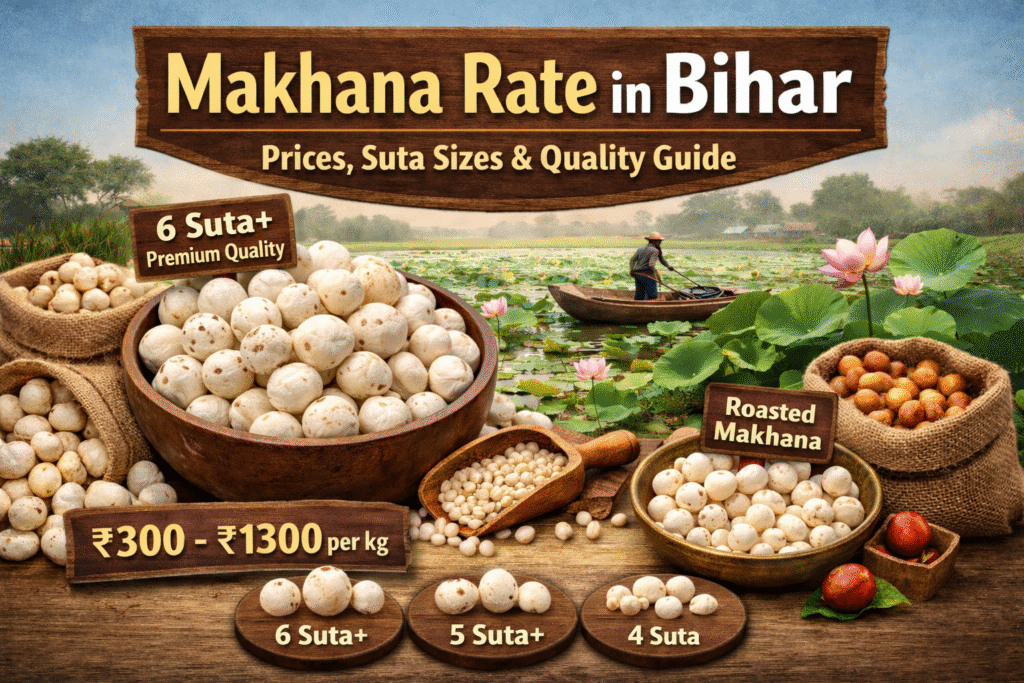
6 Suta+ makhana is mainly used by premium brands, gift packs, and export buyers. It has the highest makhana rate in Bihar because availability is limited and demand is high.
5 Suta+ Makhana (Good Quality)
This is the most commonly sold quality in retail markets.
- Medium to large size
- Good color and texture
- Roasts well
- Suitable for daily consumption
5 Suta+ makhana offers a good balance between quality and price. It is popular among households and shop owners.
4 Suta+ Makhana (Standard Quality)
This is a more affordable option.
- Smaller size compared to 5 and 6 Suta
- Slightly uneven popping
- Suitable for cooking, curries, and snacks
4 Suta+ makhana has a lower makhana rate in Bihar and is often used for bulk buying.
Small or Broken Makhana (Lower Grade)
This category includes very small or broken pieces.
- Uneven size
- Lower popping quality
- Mainly used for grinding or food processing
This type has the lowest price and is not suitable for premium retail sale.
Factors That Affect the Makhana Rate in Bihar
Several factors influence makhana prices:
1. Manual Farming
Harvesting is done by hand, which increases labor cost.
2. Season
Prices are stable during harvest season and may rise during off-season.
3. Size and Color
Large, clean, white makhana costs more than small or spotted seeds.
4. Makhana Processing
Cleaning, roasting, grading, and packing add to the final price.
5. Market Demand
Rising demand for healthy snacks increases the makhana rate in Bihar.
Wholesale vs Retail Makhana Prices
Wholesale Market
- Sold in bulk
- Minimal packaging
- Lower price per kg
- Quality may vary
Retail and Branded Market
- Small packs
- Better cleaning and grading
- Hygienic packaging
- Higher price due to processing and transport
NutVatika works directly with suppliers in Bihar to control quality and pricing.
How to Identify Good Quality Makhana
Visual Check
- White or light cream color
- Uniform size
- Fewer black spots
Taste and Texture
- Crisps properly when roasted
- Not chewy or hard
- Mild and clean taste
Storage Quality
- No moisture
- No stale smell
Checking these points helps you judge whether the makhana rate in Bihar is fair.
Is the Makhana Rate in Bihar Increasing?
Yes, makhana prices have slowly increased due to:
- Higher labor costs
- Increased health awareness
- Growing demand in cities and exports
- Limited farming regions
Even then, Bihar remains the most reliable source for quality makhana.
Why Direct Sourcing from Bihar Matters
Direct sourcing reduces middlemen and maintains quality.
Benefits
- Fresher product
- Fair pricing
- Clear origin
- Better consistency
- Support for farmers
NutVatika focuses on direct sourcing to ensure trust and quality.
NutVatika’s Quality Approach
NutVatika follows simple and honest practices:
- Direct sourcing from Bihar
- Clear Suta-based grading
- Clean roasting and storage
- Transparent pricing
- Proper packaging
This ensures customers get real value at the correct makhana rate in Bihar.
Final Thoughts
Understanding the makhana rate in Bihar becomes easy when you know about Suta size, quality types, and processing. Price differences exist because quality and effort differ.
When you choose makhana with proper knowledge, you avoid confusion and get better value. NutVatika aims to make this process clear and reliable by offering quality makhana sourced directly from Bihar.
Frequently Asked Questions (FAQs)
What is the makhana rate in Bihar?
The makhana rate in Bihar generally ranges from ₹300 to ₹1300 per kg, depending on size (Suta), quality, processing, and market demand. 6 Suta+ makhana is the most expensive, while 4 Suta+ and smaller grades are more affordable.
What does 1 Suta mean in makhana?
1 Suta is approximately 3.17 mm and is used to measure the average size of makhana seeds in Bihar’s trade system.
Which makhana quality is best?
6 Suta+ makhana is considered the best quality due to its large size, white color, even popping, and premium appearance.
Is roasted makhana more expensive than raw makhana?
Yes, roasted makhana costs more because it involves cleaning, roasting, grading, and packaging, making it ready to consume.
Does NutVatika source makhana from Bihar?
Yes, NutVatika sources makhana directly from trusted farmers and processors in Bihar, ensuring quality, freshness, and fair pricin
