The snack industry is rapidly shifting toward healthier alternatives, and makhana (fox nuts) is at the forefront of this change. As consumers become more health-conscious, the demand for nutritious, low-calorie, and gluten-free snacks continues to rise. Makhana, with its numerous health benefits and versatility, is quickly becoming a preferred snack choice. For businesses, understanding the makhana processing journey is crucial for tapping into this growing market. In this blog, we’ll explore the makhana processing steps, the benefits of this healthy snack, and why it’s an essential part of today’s snack industry.
The Makhana Processing Journey: Key Steps
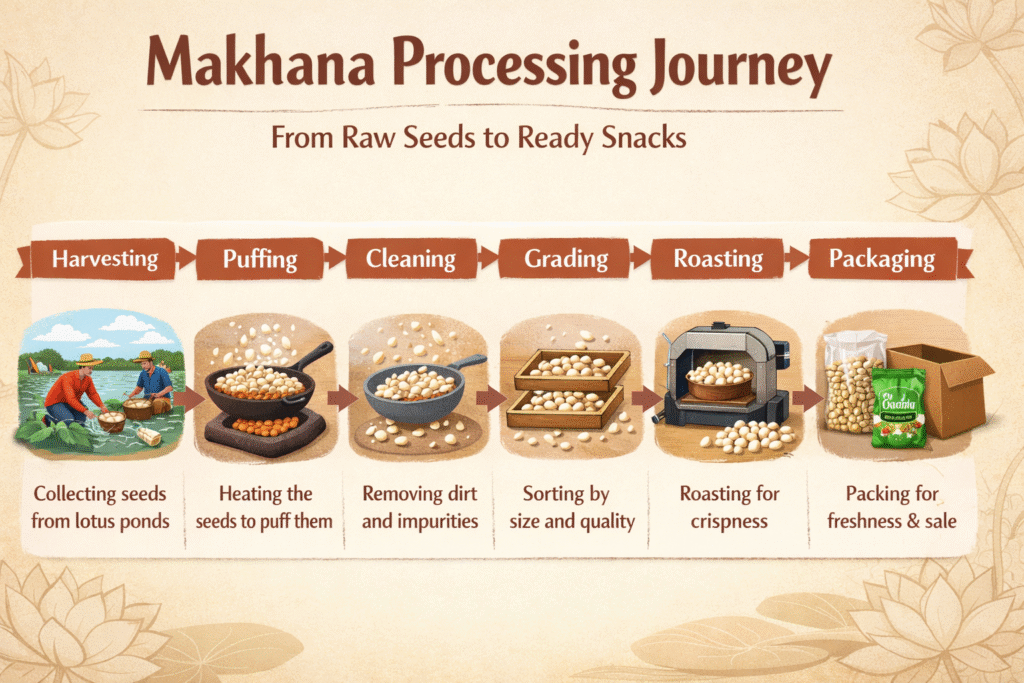
Makhana processing involves several stages that turn the raw lotus seeds into the crunchy, flavorful snack we see in stores. These steps include harvesting, puffing, cleaning, grading, roasting, and packaging. Let’s take a closer look at each of these stages:
- Makhana Harvesting
Makhana seeds are harvested from the makhana plant, which grows in shallow ponds and lakes. Makhana harvesting process begins when the lotus flowers mature and the seeds are ready to be collected. The seeds are typically gathered manually by farmers who collect the seeds as they float on the water’s surface. Since the plants grow in waterlogged conditions, this process requires careful handling.
- Makhana Puffing
After harvesting, the raw seeds are taken through the Makhana puffing process. This stage involves heating the seeds at high temperatures, which causes them to expand and become light and crispy. Puffing is essential for transforming the raw seeds into the crunchy texture that makhana is known for. This process also helps to improve the flavor and digestibility of the seeds.
- Makhana Cleaning
Cleaning is a crucial step in the makhana processing journey. The puffed seeds are cleaned thoroughly to remove any dirt, debris, or impurities that may have been picked up during harvesting or the Makhana puffing process. This ensures the final product is free from contaminants and ready for the next stages of processing.
- Makhana Grading
Once cleaned, the puffed makhana undergoes grading. This process involves sorting the seeds based on size, shape, and quality. Grading helps to separate the high-quality seeds from those that are smaller, broken, or damaged. The graded makhana is then categorized into different quality levels, which can be used for various product types, from premium snacks to bulk supply for manufacturers.
- Makhana Roasting
Makhana roasting is a key step in enhancing the flavor and texture of makhana. In this stage, the graded makhana is roasted at high temperatures to remove any remaining moisture and give it a crisp, crunchy texture. Roasting also helps to intensify the natural flavors of the seeds. Depending on the desired flavor, the roasted makhana can be seasoned with spices or other additives at this stage.
- Packaging
The final step in the makhana processing journey is packaging. Once roasted and seasoned, the makhana is packaged to preserve its freshness and crispness. Packaging also plays an important role in attracting consumers, especially when the product is marketed as a healthy snack option. The packaging ensures that the product remains sealed, protecting it from moisture and contamination. Makhana can be packaged in bulk for wholesale or in smaller retail packs, depending on the target market.
Why Makhana is Gaining Popularity in the Snack Industry
The snack industry has seen a surge in demand for healthier alternatives, and makhana fits perfectly into this trend. It offers a low-calorie, high-protein snack that is free from gluten and other allergens, making it an appealing choice for health-conscious consumers. Below are some reasons why makhana is becoming a popular choice in the snack industry:
- Nutritional Benefits of Makhana
Makhana is packed with nutrients like protein, fiber, magnesium, and antioxidants, making it a great snack for maintaining overall health. It is also low in calories, making it suitable for those looking to manage their weight or adopt a healthier lifestyle. The high fiber content in makhana aids in digestion and promotes gut health.
- Gluten-Free and Allergen-Free
With the increasing number of people adopting gluten-free diets, makhana offers a perfect solution. It is naturally gluten-free and can be safely consumed by individuals with gluten intolerances or sensitivities. Additionally, makhana is a safe snack for those avoiding common allergens like peanuts or soy.
- Versatility in Snack Products
Makhana can be used in a variety of snack products. It can be roasted and seasoned with various spices to create a range of flavored snacks. It can also be used as an ingredient in protein bars, health mixes, or even as a topping in savory dishes. This versatility makes it a valuable product for snack manufacturers.
- Sustainable Crop
Makhana is a sustainable crop that requires minimal water and grows in natural water bodies. Unlike some other crops that demand large amounts of water and chemicals, makhana is eco-friendly and can be produced without putting a strain on the environment. This makes it an attractive choice for businesses looking to offer sustainable, eco-friendly products.
Market Opportunities for Makhana Processing
The demand for healthy, plant-based snacks is growing, and makhana is well-positioned to tap into this trend. For businesses looking to enter the snack market or expand their product lines, investing in makhana processing offers several opportunities:
- Expanding Consumer Base
With the rise in health-conscious consumers, there is a growing demand for snacks that are not only tasty but also nutritious. Makhana fits perfectly into this demand, offering a snack that is low in calories, high in protein, and packed with essential nutrients. By processing and marketing makhana, businesses can attract a new, health-focused customer base.
- Product Innovation
Makhana offers businesses the opportunity to innovate with new snack products. From roasted makhana with unique spice blends to makhana-based protein bars, businesses can create a wide range of products to meet different consumer preferences. This product flexibility gives manufacturers the chance to stand out in the crowded snack market.
- Export Potential
The global demand for healthy snacks is rising, and many countries are increasingly interested in plant-based and gluten-free options. Makhana is gaining popularity not only in India but also in international markets. This provides businesses with the opportunity to export processed makhana and expand their reach globally.
Challenges in Makhana Processing
While the potential for makhana processing is significant, there are a few challenges businesses may face in this industry:
- Quality Control
Ensuring consistent quality in makhana processing is crucial. The quality of raw makhana can vary depending on the region and the harvesting process. Additionally, each stage of processing—especially puffing, roasting, and grading—requires precise control to ensure the final product meets high standards.
- Supply Chain Management
Makhana is grown in specific regions, which means that businesses must establish a reliable supply chain to ensure a steady supply of high-quality raw material. Variability in the availability of makhana due to weather conditions or regional differences can pose challenges to businesses.
- Competition
As more businesses enter the makhana market, competition is likely to increase. Manufacturers will need to focus on product differentiation, branding, and marketing to stand out in the crowded snack space.
Conclusion
Makhana processing presents a significant opportunity for businesses looking to enter the growing market of healthy snacks. By understanding the key steps in the makhana processing journey—harvesting, puffing, cleaning, grading, roasting, and packaging—businesses can produce high-quality makhana products that cater to today’s health-conscious consumers. Despite challenges like supply chain management and competition, the potential rewards for businesses investing in makhana processing are considerable, offering the chance to capture a share of the rapidly expanding market for nutritious snacks.
Ready to Explore Makhana Processing for Your Business?
If your business is looking to expand into the healthy snack market or source high-quality makhana, Nutvatika is your trusted partner. As a leading makhana manufacturer and supplier, we can help you streamline the process of sourcing and processing makhana, ensuring top-quality products for your customers
