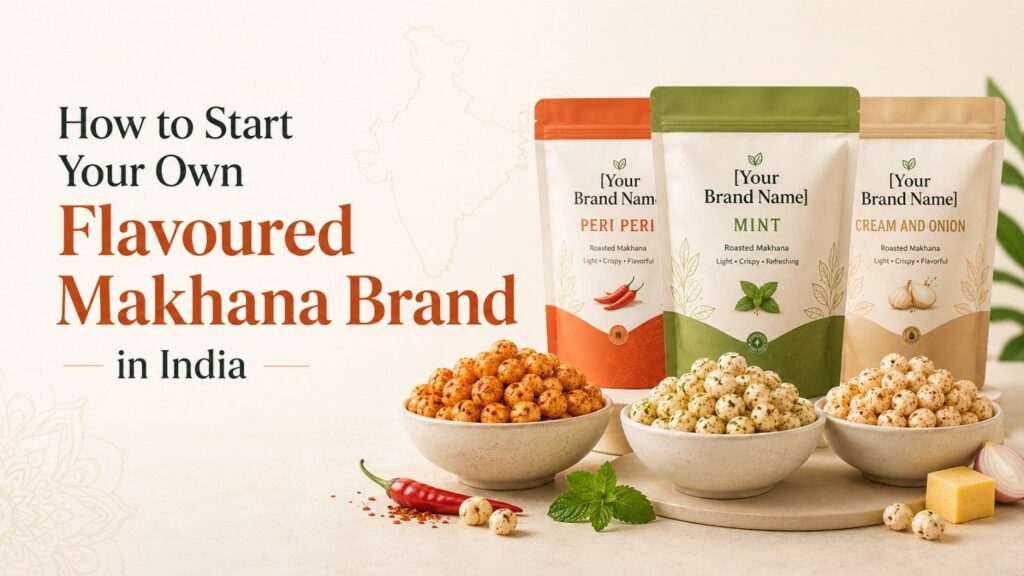
Starting a flavoured makhana brand in India can be a smart business idea, especially when more people are looking for light, tasty, and better snack options. Makhana, also called fox nuts, is no longer limited to traditional home use. It is now sold as a modern packaged snack in supermarkets, online stores, health food shops, gift boxes, and premium snack counters.
The best part is that makhana is easy to position in many ways. You can sell it as a healthy snack, a tea-time snack, a kids’ snack, a festive gift item, or a premium product for urban buyers. But to build a real brand, you need more than just good taste. You need the right flavours, packaging, pricing, manufacturer, legal setup, and marketing plan.
This guide will help you understand how to start your own flavoured makhana brand in India step by step.
1. Understand the Market First
Before you spend money on packaging or production, study the market. Look at other makhana brands online and offline. Check what flavours they sell, what pack sizes they use, how they price their products, and how customers respond to them.
You can check marketplaces, grocery stores, health stores, quick commerce apps, and social media pages. Read customer reviews carefully. Reviews often reveal real problems such as low crunch, too much masala, weak flavour, broken makhana, poor packaging, or high price.
This research will help you find gaps. Maybe customers want better Indian flavours. Maybe they want smaller trial packs. Maybe they want premium gift packs. Your job is to find where your brand can stand out.
2. Choose Your Brand Positioning
Your brand should not try to target everyone from day one. A clear position makes your product easier to market.
You can position your makhana brand in different ways. It may work as a healthy everyday snack, a premium flavoured makhana range, a kids-friendly snack, a fitness-focused product, or a festive gifting option. Some brands also focus on regional Indian flavours or private label supply.
For example, if your target customers are working professionals, your packaging and messaging can focus on office snacking. If your target customers are families, you can focus on taste, quality, and value packs. If you want to enter gifting, your packaging needs to look premium.
A clear brand idea will guide every decision, from flavour selection to pouch design.
3. Select the Right Flavours
Flavour is one of the most important parts of a flavoured makhana business. People may try your product because of packaging, but they will buy again only if the taste is good.
You can start with popular flavours such as salted, peri peri, cheese, pudina, masala, cream and onion, black pepper, tomato chilli, barbecue, and caramel. However, do not launch too many flavours at the beginning. It is better to start with three to five strong flavours and test them properly.
A good starting range may include one simple flavour, one spicy flavour, one cheesy flavour, one Indian masala flavour, and one sweet flavour. This gives customers variety without making production too complex.
Before final production, test your flavours with real people. Ask them about crunch, salt level, spice level, aroma, aftertaste, and overall liking. Honest feedback can save you from costly mistakes.
4. Decide Your Pack Sizes
Pack size affects your price, profit, and customer buying decision. Small packs are good for first-time buyers. Bigger packs are better for families and repeat customers.
Common pack sizes include 20g, 30g, 50g, 80g, 100g, 150g, and 200g. You can also create combo packs with different flavours. Combo packs work well online because customers like trying multiple flavours in one order.
If you are launching in retail stores, small and mid-size pouches may work better. If you are selling online, combo packs and value packs can help increase order value.
Choose pack sizes based on your sales channel and target buyer.
5. Find a Reliable Flavoured Makhana Manufacturer
A good flavoured makhana manufacturer can make your business easier. Manufacturing makhana on your own needs machines, skilled labour, roasting setup, seasoning process, packaging equipment, and quality control. For a new brand, working with an experienced private label makhana manufacturer is often more practical.
A manufacturer can help with roasting, flavouring, private label packing, bulk production, custom packaging, and regular supply. Some manufacturers can also help with flavour development and packaging guidance.
Before choosing a manufacturer, check whether they offer private label makhana, custom flavours, sample support, flexible pack sizes, and regular bulk supply. Also ask about their minimum order quantity, packaging options, food safety practices, and how they maintain crunch and freshness during production.
Do not select a manufacturer only because they offer the lowest price. Your Flavoured Makhana Brand in India depends on taste, freshness, and consistency. Poor-quality production can damage your brand before it grows.
6. Take Care of Food License and Labelling
If you want to sell packaged food in India, you need to follow food business rules. Depending on your business size and selling model, you may need FSSAI registration or a food license. The product label should also carry all required details clearly..
A proper makhana pack usually includes the brand name, product name, ingredient list, net weight, nutrition details, batch number, manufacturing date, best before date, MRP, FSSAI license number, manufacturer details, customer care details, and storage instructions.
Do not make false or exaggerated claims on the pack. Claims like “100% healthy” or “best in India” can create problems if they are not supported. Keep your label clean, honest, and easy to understand.
Working with a manufacturer who understands food labelling can help you avoid mistakes.
7. Design Attractive Packaging
Packaging plays a major role in snack sales. Your product may be tasty, but if the pouch looks dull or confusing, customers may ignore it.
Good packaging should clearly show the flavour, quantity, brand name, and main product benefit. Use clean design, easy-to-read fonts, and good colours. Your makhana should look fresh, crunchy, and premium.
If possible, use packaging that protects the crunch. Makhana can lose its texture if the packing is weak or exposed to moisture. A resealable pouch can also be useful for larger packs.
Your packaging should match your price point. A premium product needs premium design. A mass-market product needs clear and simple packaging.
8. Calculate Your Pricing Carefully
Many new snack brands make mistakes with pricing. They calculate only the manufacturing cost and forget other expenses.
Your final cost may include raw makhana, roasting, flavouring, packaging material, printing, labour, transport, storage, marketplace fees, marketing, distributor margin, retailer margin, and possible returns or damage.
If you sell through retailers, you need to leave margins for distributors and shops. If you sell online, you need to consider platform commission, shipping cost, ads, and discounts.
Do not price too low just to get orders. Low pricing can hurt your profit and make it difficult to scale. At the same time, high pricing needs strong branding and clear value.
9. Start Small and Test the Product
Do not begin with a very large production order. Start small, test your product, and improve it.
Give samples to real buyers. Try selling in a small local market, through social media, or among known customer groups. Watch how people react. Which flavour sells first? Which pack size gets more attention? Are people willing to pay your price? Do they reorder?
This early testing will teach you more than guesswork. Once you know what works, you can increase production with more confidence.
10. Choose the Right Sales Channels
You can sell flavoured makhana through many channels. Your choice depends on your budget, team, and brand plan.
Online selling is good for new brands because you can start with your website, social media, and marketplaces. Retail stores help build local trust. Distributors can help you reach more shops. Corporate gifting can bring bulk orders during festivals and special events.
You can also sell through health stores, gyms, cafes, supermarkets, and gift hamper businesses. If your product quality is strong, you can later explore export or private label opportunities.
Start with one or two channels. Do not spread yourself too thin in the beginning.
11. Market Your Brand with Simple Messaging
Your marketing should be easy to understand. Show why your makhana is worth buying.
Talk about taste, crunch, better snacking, Indian flavours, office snacking, family snacking, travel snacking, and gifting. Use short videos, product photos, customer reviews, and simple educational content.
You can create content around topics like best makhana flavours, evening snack ideas, office snacks, festive snack hampers, healthy snack swaps, and how flavoured makhana is made.
Good content builds trust. It also helps your website rank on Google over time.
12. Focus on Repeat Buyers
A snack brand grows when customers buy again. Repeat orders depend on consistent taste, fresh packaging, fair pricing, and good customer experience.
Listen to complaints. If people say one flavour is too salty, improve it. If they say the pack is small for the price, review your offer. If makhana breaks during delivery, improve packaging.
Small improvements can build a strong brand over time.
Conclusion
Starting your own flavoured makhana brand in India is a good opportunity, but it needs proper planning. You need to understand the market, choose the right flavours, find a reliable manufacturer, create attractive packaging, follow food rules, and build a clear sales plan.
Start small, test your product, learn from customers, and scale step by step. A strong flavoured makhana brand is built on taste, trust, and consistency.
If you are ready to launch your own makhana brand, Nutvatika can help you with flavoured makhana manufacturing, private label support, bulk supply, and custom packaging solutions.
Contact Nutvatika today to discuss your flavoured makhana brand in india idea and get started with the right manufacturing partner.
